

You scrub the mold off the bathroom wall, wipe down the window frame, or spray the dark spot in the corner. For a while, everything looks fine. Then the discoloration appears again, sometimes in exactly the same place.
If mold keeps coming back after you clean it, the problem may not be the cleaning method alone. Moisture could still be reaching the affected material, or mold may be growing somewhere you cannot see.
At Code 3 Water Restoration & Mold Remediation, we regularly hear from Northern Colorado homeowners who have already cleaned an area, only to find that the mold returns. Our first question is not which product they used. It is where the moisture is coming from and whether it is still present.
Key Takeaways
- Recurring mold usually means moisture is still reaching the area, the original growth was not fully addressed, or both.
- Cleaning a visible patch does not necessarily address damp drywall, insulation, wood, or other materials behind it.
- Bleach, sprays, and paint do not repair leaks or solve condensation and ventilation problems.
- Mold can return in bathrooms, crawlspaces, attics, and areas affected by foundation or plumbing moisture.
- Code 3 uses moisture measurements and building experience to investigate the source, then recommends a remediation and repair plan based on what the property needs.
Why Does Mold Keep Coming Back After Cleaning?
Mold needs moisture to grow. If a surface is cleaned but the conditions that made it damp remain, new growth can develop.
The EPA explains that cleaning mold without fixing the water problem makes recurrence likely.
Code 3 commonly investigates returning mold associated with recurring leaks, condensation, poor ventilation, and moisture that has gone unnoticed inside building materials. The visible growth may disappear after cleaning, but a damp area behind the surface can remain.
In Northern Colorado, the team frequently encounters moisture problems in crawlspaces, around foundations, in attics, and in bathrooms. The specific cause differs from one property to another, so finding it matters more than choosing another cleaning product.
A Crawlspace Problem That Surface Cleaning Would Not Solve
On a recent Code 3 project, the team found visible growth in a crawlspace with extremely high moisture conditions.
Removing the growth was only part of the work that needed attention. The moisture conditions in the crawlspace also had to be addressed. Otherwise, the environment that supported the growth would still be there. This is why a recurring mold problem may require looking beyond the spot the homeowner can see.
Mold returned after you cleaned it? Contact Code 3 for a free mold inspection to discuss the affected area and what may be causing the moisture.
Cleaning Mold Is Not the Same as Fixing the Cause
Surface cleaning can remove visible growth from some materials. It does not tell you whether the wall, flooring, insulation, or framing underneath is dry.
This difference is especially important with porous materials. Drywall, insulation, and other absorbent materials may be affected beyond their exposed surfaces. Depending on the extent of the damage, cleaning alone may not be enough, and some material may need to be removed.
Homeowners often assume the problem is solved because the stain is gone. If water is still entering the area, however, the conditions for mold growth have not changed.
Code 3’s approach is to assess both the affected material and the source of moisture. The goal is to identify what can be cleaned and retained, what needs to be removed, and what must be repaired to reduce the chance of the same problem returning.
Why Bleach and Other Cleaning Methods May Not Stop Mold From Returning
Bleach can be used to clean certain hard surfaces, but it is not a substitute for moisture control or proper removal of mold-affected materials.
The EPA does not recommend bleach as a routine mold-cleanup method. Killing mold is not the same as removing it, and a disinfected surface can become moldy again if moisture remains.
Code 3 uses different cleaning and treatment methods depending on the materials and conditions involved. The team may use bleach for certain applications, but porous materials such as drywall and insulation require a different assessment. Code 3 also uses specialized botanical disinfectants where appropriate as part of its remediation work.
What About Sprays, Vinegar, and Scrubbing?
These methods may help clean a limited surface problem, but they cannot reach every concealed area or correct a leak.
If the same spot develops mold again after cleaning, look beyond the product you used. Repeatedly applying a cleaner is unlikely to solve a plumbing leak, persistent condensation, or moisture entering through a foundation.
Do Not Paint Over Recurring Mold
Painting or priming over a stained area may hide an early warning sign without addressing the affected material or moisture underneath.
Code 3 has seen situations where covering the area delayed discovery of a larger problem. The CDC advises removing mold and fixing the water problem before painting or caulking.
If you are deciding whether a small area can be handled yourself, see our related article, DIY Mold Removal vs. Professional Mold Remediation. For an explanation of the two types of service, read Mold Removal vs. Mold Remediation.
Where Is the Moisture Behind Recurring Mold Coming From?
The stain does not always appear directly beside the source of the water. Moisture can travel through building materials before visible damage develops.
When Code 3 investigates a recurring mold problem, the team considers several possible sources.
Plumbing Leaks
A slow leak behind a toilet, beneath a sink, or inside a wall can keep nearby materials damp. Cleaning the visible growth will not stop the water from reaching the area.
Roof and Flashing Problems
Water entering through a roof or flashing can affect attic materials, insulation, ceilings, and walls. The visible damage may appear some distance from the point of entry.
Foundation and Crawlspace Moisture
Water intrusion, drainage conditions, and elevated crawlspace moisture can affect building materials even when the main living area looks dry.
Condensation and Poor Ventilation
Bathrooms and other moisture-prone rooms can develop recurring dampness when ventilation is insufficient. Condensation on a cold surface can repeatedly wet the same area.
The location of the mold is a clue, not a diagnosis. A professional assessment can help determine which moisture source is affecting the material.
How Does Code 3 Find Hidden Moisture?
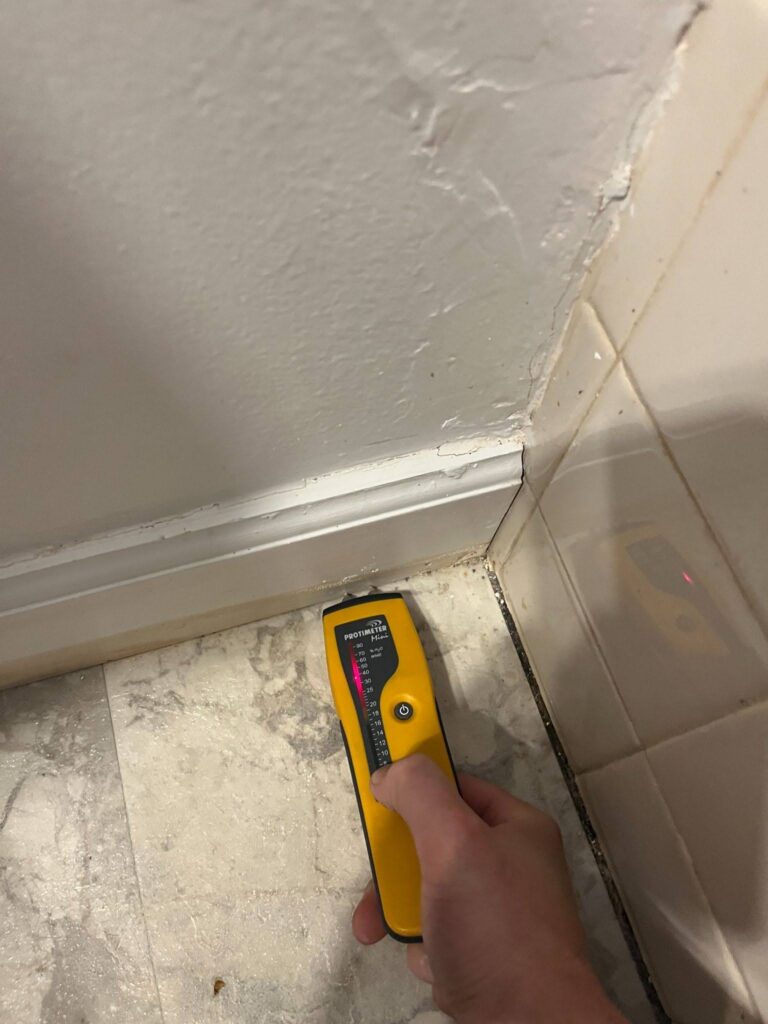
Code 3 combines knowledge of home construction with infrared scanning and invasive or non-invasive moisture testing when appropriate.
Infrared equipment can help identify temperature differences that warrant further investigation. It does not directly identify mold. Moisture measurements and inspection of affected materials help the team determine where water may be present.
According to Code 3, an initial free inspection and diagnostic assessment commonly takes about 10 to 30 minutes, depending on the conditions and areas that need to be checked. More involved investigation or testing may be recommended when the source or extent of the problem remains unclear.
Homeowners are sometimes surprised to learn that the visible patch is only one part of the affected area. Code 3 has found hidden growth and pockets of moisture that were not apparent from the room itself.
What Professional Remediation Does Differently When Mold Keeps Returning
On a recurring mold call, Code 3 begins with an inspection to understand the homeowner’s concerns, identify affected areas, and recommend a plan of action.
The work then depends on what the team finds:
- Investigate the moisture source. Determine why the affected area became wet and whether moisture is still present.
- Assess affected materials. Identify what can be cleaned and retained and what needs to be removed.
- Use containment and air handling where needed. Code 3 may use commercial HEPA filtration equipment as part of the remediation process.
- Remove and clean affected material. The team aims to limit removal to what is necessary for the conditions found.
- Address the underlying problem. Depending on the property and scope of work, Code 3 can handle repairs involving plumbing, roofing, drainage, excavation, crawlspaces, and other building components.
- Verify moisture conditions. The team measures moisture throughout the work and checks affected materials and the structure before completing the project.
Third-party mold testing may also be used when needed. It is not automatically required for every visible mold problem.
For more on the service itself, visit Code 3’s mold remediation page.
A Bathroom Leak That Became a Larger Restoration Job
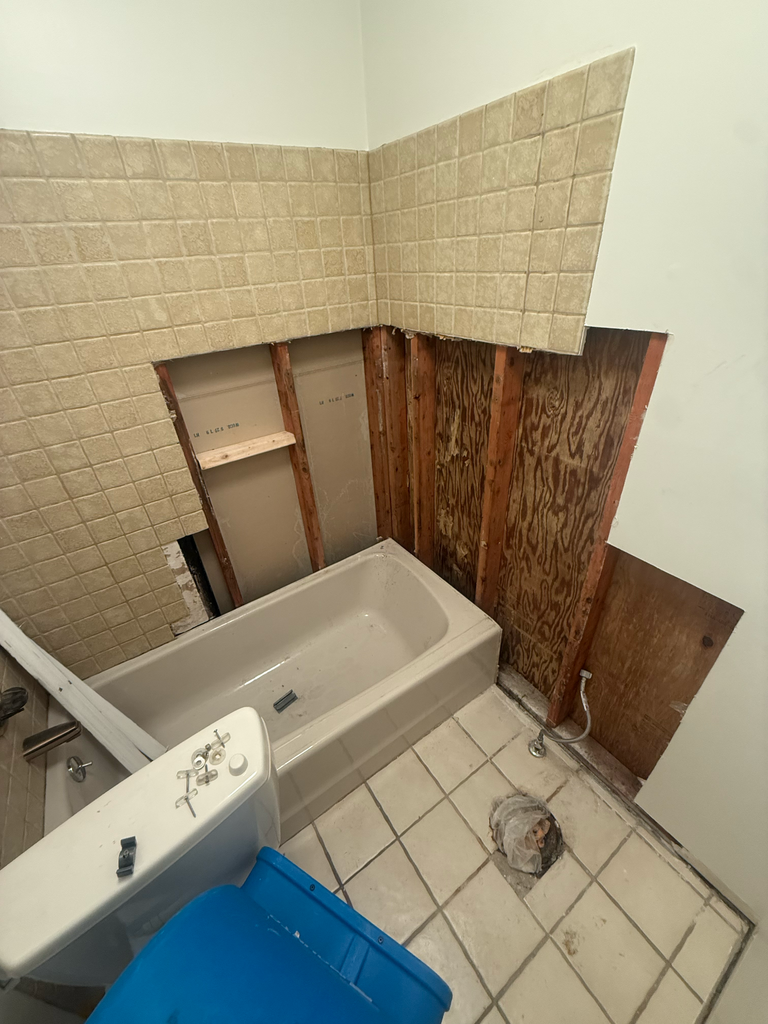
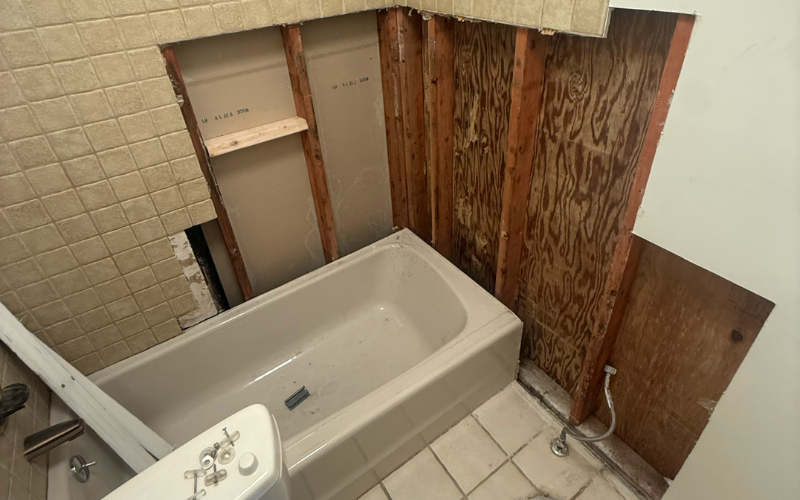
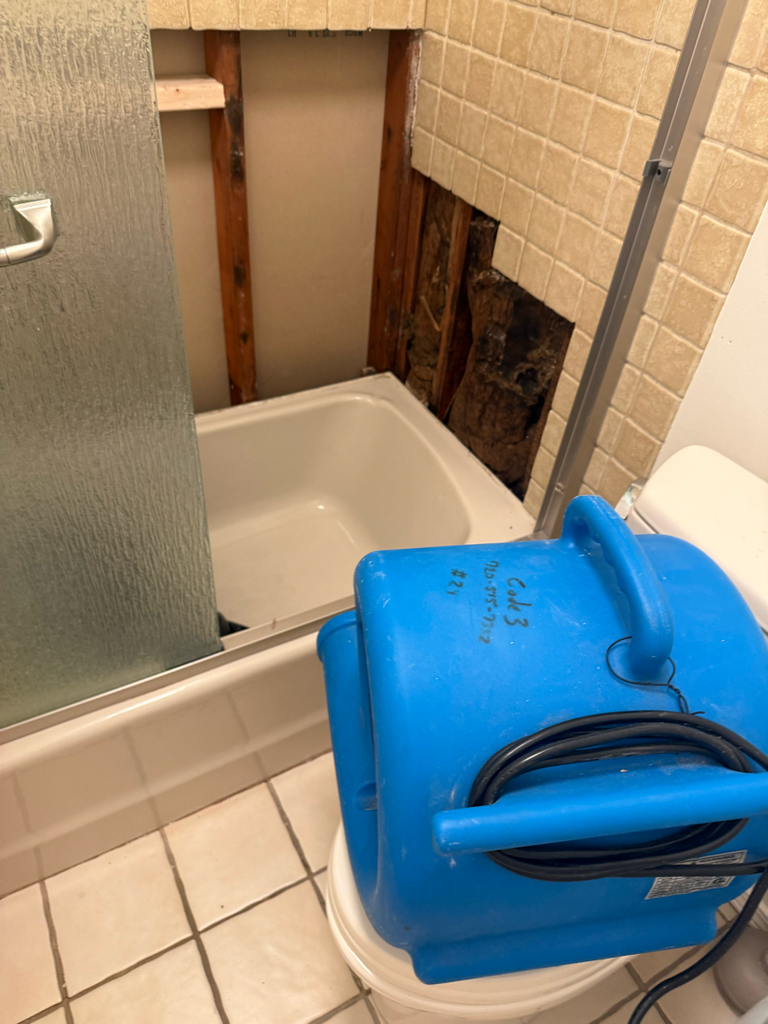
Code 3 recently worked on a bathroom where a water problem had continued behind the shower. The damage developed over an extended period, possibly months or longer, before the shower tile walls eventually gave way.
By that point, the repair required complete removal of the affected shower and tile, followed by multiple days of cleaning, treatment, and drying.
The visible condition of a bathroom wall does not always show how much water has moved behind it. If mold or staining repeatedly appears around a toilet, shower, or adjoining wall, identifying the plumbing or moisture source early can help reveal what repairs are actually needed.
How Can You Tell Whether Mold Is Likely to Return?
No contractor can guarantee that a property will never develop a new leak or moisture issue.
What Code 3 can do is address the conditions identified during the current project, monitor moisture while remediation is underway, and explain what the homeowner should watch for afterward.
The team has also discovered secondary leaks during restoration work and addressed them as part of the project.
After cleanup, pay attention to recurring odors, discoloration, peeling paint, warped materials, or unusual humidity in the affected area. Bathrooms, attics, and crawlspaces deserve particular attention because moisture problems in these spaces may go unnoticed.
For general prevention, monitor indoor humidity, maintain ventilation, and address new leaks promptly. Code 3 advises keeping humidity below 60 percent. The EPA recommends keeping indoor humidity below 60 percent, ideally between 30 and 50 percent when possible.
When Should You Stop Cleaning Mold and Call a Professional?
A small spot is not always a simple problem if it keeps returning.
Consider a professional assessment when the same area becomes moldy after repeated cleaning, the moisture source is unclear, a musty odor persists, or the affected materials may extend into a wall, attic, or crawlspace.
An experienced professional may also be helpful when growth covers a larger area, follows substantial water damage, or involves contaminated water. The EPA notes that homeowners can handle many mold areas under about 10 square feet themselves, but hidden mold or extensive damage can change that decision.
Mold exposure may cause allergic or respiratory symptoms in some people, but symptoms alone cannot establish whether mold is present or identify the cause of a health concern. If someone in the home is experiencing symptoms, they should speak with a qualified healthcare professional.
If you have already cleaned the same spot more than once, a moisture assessment may be more useful than another round of spray and scrubbing.
Frequently Asked Questions About Recurring Mold
Why does mold keep coming back in the same spot?
The area may still be receiving moisture from a leak, condensation, poor ventilation, or another source. Cleaning can remove visible growth without resolving dampness behind or inside the affected material. If mold returns in the same location, investigate why that specific area keeps getting wet.
Why does mold return after I use bleach?
Bleach does not repair water intrusion, improve ventilation, or dry damp building materials. It may be suitable for certain cleaning tasks, but it does not replace removal of affected material or correction of the moisture source. If the area continues getting wet, mold can grow again.
Can mold come back after professional remediation?
Yes. New mold can develop if a new leak occurs or moisture returns. A remediation project should address the identified source, remove or clean affected materials as appropriate, and verify drying conditions. Ongoing maintenance and prompt attention to future water problems remain important.
Does recurring mold mean there is mold behind the wall?
Not always. Recurring growth may come from surface condensation or another visible moisture source. However, when a wall has been affected by a plumbing leak or other water intrusion, concealed moisture or growth is possible. An assessment can help determine whether further investigation is needed.
Why does mold keep returning in my bathroom?
Repeated moisture from showers, condensation, insufficient ventilation, or a plumbing leak may be keeping the area damp. If cleaning and ventilation changes do not resolve the problem, inspect the surrounding plumbing and affected materials rather than repeatedly treating the visible spot.
Do I need mold testing if the mold keeps returning?
Not necessarily. The CDC does not recommend routine mold testing when visible mold is already present, because identifying the species generally does not change the need to remove the growth and correct the moisture problem. An inspection can help investigate the source and extent, with specialized testing considered when appropriate.
How long does a recurring mold inspection take?
Code 3 reports that its initial free inspection and diagnostic assessment commonly takes about 10 to 30 minutes. The time needed can vary depending on the property and the conditions found. A more involved investigation may be recommended if moisture appears to extend into concealed areas.
What should I do if mold returns after I have already cleaned it twice?
Avoid covering the area with paint or continuing to clean it without investigating the source. Check for an active leak, recurring condensation, or another moisture problem. If the cause is not clear, contact a mold remediation professional to assess the affected materials and determine what further work may be needed.
Mold Keeps Coming Back? Find Out Why.
If you have cleaned the same area repeatedly, the next step is to find out what is keeping it damp.
Code 3 Water Restoration & Mold Remediation provides free initial mold inspections for homeowners in Fort Collins and throughout Northern Colorado. The team can investigate the affected area, recommend an appropriate remediation plan, and handle many of the repairs needed to address the underlying moisture problem.
Contact Code 3 to schedule a free mold inspection and get a clearer picture of why the mold keeps returning.