

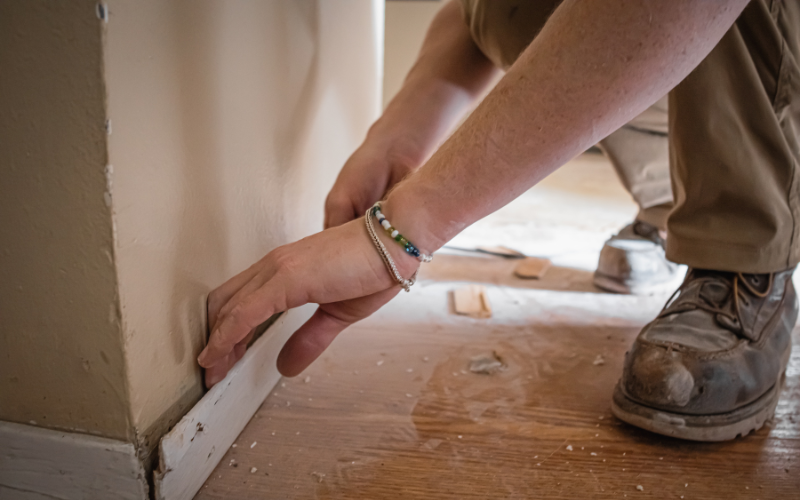
You walk into a room and notice something smells different. It may be earthy, damp, stale, or simply musty. You look around for a leak or visible mold, but nothing stands out. So, what does mold smell like, and does a musty smell in your house automatically mean you have hidden mold?
Mold can produce a noticeable musty or moldy odor, particularly when it is growing in a damp area that is not immediately visible. But smell alone cannot confirm that mold is present. Sewer gas, standing water, damp carpet, plumbing issues, and even pests can create odors that homeowners mistake for mold.
The important step is not guessing based on the smell. It is figuring out where the odor is coming from and whether moisture is present.
Key Takeaways
- Mold is often described as musty, earthy, damp, stale, or similar to wet organic material.
- A moldy smell can be present even when no visible growth is easy to find.
- Hidden mold may grow behind drywall, underneath flooring, around plumbing, in crawlspaces, attics, or other damp areas.
- A musty smell does not automatically mean mold. Plumbing odors, standing water, damp carpet, and other household problems can smell similar.
- The strength of an odor does not reliably tell you how large a mold problem is.
- If an unexplained musty odor persists, look for moisture and water damage rather than trying to cover the smell.
What Does Mold Smell Like?
There is no single mold smell that every homeowner describes the same way.
People commonly use words such as:
- musty
- earthy
- damp
- stale
- moldy
- similar to wet wood or damp materials
The EPA explains that molds can produce microbial volatile organic compounds, or mVOCs, which may create the characteristic moldy or musty odor associated with mold growth.
That smell is useful as a warning sign, but it is not a mold test. You cannot identify the mold species, determine how extensive the growth is, or establish whether an odor poses a health risk based on smell alone.
A better question is: Why does this area smell damp or musty, and what is providing the moisture?
If the odor is persistent, especially in an area that has experienced a leak or water damage, it is worth investigating.
Does a Stronger Mold Smell Mean a Bigger Mold Problem?
Not necessarily. A strong odor may indicate that something nearby needs attention, but the intensity of the smell does not provide a reliable measurement of how much mold is present.
Several factors can affect how noticeable an odor becomes:
- how enclosed the space is
- airflow through the area
- how close you are to the source
- the type of damp material involved
- whether doors, windows, or HVAC systems are moving the odor
- changing temperature and humidity conditions
An odor that comes and goes can still be worth investigating. For example, you may notice it more strongly when a room has been closed, when indoor humidity rises, or when air begins moving through an area.
The smell itself is a clue. Finding the moisture source provides much more useful information.
Can You Smell Mold Without Seeing It?
Yes. The EPA specifically recommends considering hidden mold when a building smells moldy, but the source cannot be seen. Mold can grow in dark, concealed areas as long as moisture and a suitable material are present.
That means a homeowner may notice a musty smell in the house before finding visible discoloration.
Hidden mold can sometimes grow:
- behind drywall
- behind wallpaper or paneling
- beneath carpet and padding
- inside wall cavities around plumbing
- behind furniture against damp walls
- above ceiling tiles
- in crawlspaces
- in attics or roof materials
- in some parts of ventilation systems
Visible surfaces may look completely normal while moisture affects the other side of the material. This is particularly relevant after a water loss. A plumbing leak may be repaired, but drywall, insulation, subflooring, or framing can remain damp if the water travelled farther than expected.
If your house smells musty and there is a history of water damage, the odor may be a reason to investigate areas you cannot easily see.
Where Should You Look for Hidden Mold in Your Home?
Start with places where water or condensation is most likely.
Around Plumbing
Look beneath sinks, around toilets, behind appliances with water connections, near water heaters, and around walls containing supply or drain lines. A slow plumbing leak may dampen materials for weeks before visible damage becomes obvious.
Basements and Crawlspaces
These areas can experience moisture from plumbing, water intrusion, condensation, or drainage problems. Look for damp materials, staining, water marks, peeling finishes, or a musty smell that becomes stronger as you enter the area.
Bathrooms
Bathrooms naturally experience more moisture than many other rooms. Check around showers, tubs, toilets, ceilings, vanities, flooring, and plumbing penetrations. Poor ventilation or a concealed leak can create moisture outside the areas you normally expect to get wet.
Attics and Ceilings
Roof leaks, condensation, or other moisture problems may affect insulation and framing before staining becomes visible inside the living area.
Behind Finished Walls and Flooring
Water can travel behind drywall or underneath flooring. A room may smell musty even though the finished surface looks clean. If there has been a previous leak nearby, concealed materials deserve attention.
HVAC and Ventilation Areas
A musty odor that appears primarily when heating or cooling equipment operates may warrant inspection of the system and nearby moisture sources. The EPA advises against operating an HVAC system when it is known or suspected to be contaminated with mold until the issue has been properly evaluated.
What Else Can Cause a Musty Smell in a House?
A musty smell is a reason to investigate. It is not proof of mold. That distinction is important. Several household problems can produce odors that homeowners describe as damp, stale, or musty.
Sewer Gas or a Dry P-Trap
A plumbing drain that has lost its water seal can allow sewer odors into a room. Homeowners sometimes describe these smells as damp or unpleasant without immediately recognizing them as plumbing-related.
Standing Water
Water trapped beneath an appliance, inside a drain pan, in a crawlspace, or elsewhere in the building can create odors even when mold is not the primary problem.
Damp Carpet or Padding
Carpet that has been wet can retain odors, particularly when moisture reaches the padding or subfloor underneath.
Pests or a Dead Animal
An animal inside a wall, attic, crawlspace, or other concealed area can produce a strong odor that may initially be difficult to locate.
General Moisture Problems
Not every damp smell means visible mold has developed. The odor may instead point to a moisture condition that could eventually support mold if it is not addressed.
This is why an honest mold inspection should start with finding the source of the odor, not assuming the conclusion before the property has been evaluated.
A musty smell does not automatically mean you need mold remediation. If you cannot identify the source, Code 3 can help determine what is actually happening before recommending next steps.
How Can You Tell Whether a Musty Smell Is Mold?
There is no reliable smell test you can perform at home. Instead, look for supporting evidence of moisture or water damage.
Check for:
- visible mold or discoloration
- previous plumbing leaks
- roof leaks
- water staining
- bubbling or peeling paint
- warped flooring or trim
- recurring condensation
- damp drywall
- elevated humidity
- recent flooding or water damage
- an odor that is stronger in one specific area
EPA guidance notes that visual inspection and musty odors can be more useful for identifying dampness and mold problems than routine air sampling.
The CDC also does not recommend routine mold testing simply to determine whether mold exists in a home. If mold is visible or a moisture problem is identified, the priority is addressing the growth and correcting the source of moisture.
What Should You Do If Your House Smells Musty?
If you notice a persistent musty smell, start with the obvious places before opening walls or buying test kits.
1. Try to Narrow Down the Location
Walk through the home and determine where the odor is strongest. Does it seem to come from one bathroom? A basement corner? Beneath a sink? Near an HVAC vent? The location can provide useful clues.
2. Look for Signs of Moisture
Check for staining, damp materials, condensation, plumbing drips, roof damage, or flooring changes. Think about recent events too. Was there a plumbing leak, appliance failure, roof problem, basement water issue, or other water loss?
3. Check Areas That Are Easy to Inspect Safely
Look beneath sinks, around toilets, near appliances, around windows, and in accessible basement or crawlspace areas. Do not disturb materials if you suspect significant concealed mold.
4. Pay Attention to When the Smell Changes
Make note of whether it becomes stronger after rain, after using a shower, when the HVAC turns on, or after a room has been closed. Those details can be useful when you speak with a restoration professional.
5. Investigate Persistent Odors
If the smell continues and the source is not obvious, a moisture assessment can help determine whether there is a concealed water problem.
Musty smell but nothing to see? Contact Code 3 to have the affected area evaluated before cutting into walls or guessing at the source.
What Should You Avoid Doing When You Suspect Hidden Mold?
Trying to find concealed mold can sometimes disturb an affected area and spread material into the surrounding space. The EPA specifically cautions that investigating hidden mold requires care because disturbing a concealed growth area may release spores.
Do Not Start Cutting Open Drywall Without a Plan
Opening a wall can expose a much larger affected area than expected. If there is significant mold on the concealed side of drywall or wallpaper, disturbing the material can release mold particles into the room.
Do Not Mask the Odor and Assume the Problem Is Solved
Air fresheners, fragrances, and odor sprays may temporarily cover a smell. They do not address moisture. If the odor returns, the underlying condition remains.
Be Careful With Fans
If you suspect an area contains significant mold growth, aggressively moving air across contaminated material may move particles beyond the affected area.
The correct drying and air-handling approach depends on what caused the moisture and what materials are involved.
Do Not Assume You Need Mold Testing First
Routine mold testing is not necessary in every situation. The CDC does not recommend routine home mold testing. An inspection focused on moisture, visible conditions, and the building itself can often provide more useful information about what needs to happen next.
How Does a Professional Find Hidden Mold?
A hidden-mold investigation should be less about hunting for a particular species and more about tracing moisture.
An experienced restoration professional may start by:
- reviewing where and when the odor occurs
- asking about previous leaks or water damage
- inspecting accessible areas for visible moisture or damage
- using moisture measurements where appropriate
- investigating likely concealed water paths
- determining whether materials need to be opened or removed for further assessment
The EPA notes that moisture meters and other specialized equipment can be useful when investigating concealed mold and damp building materials.
What Happens If Hidden Mold Is Found?
Finding mold is only part of the process. The moisture condition that allowed it to develop also needs to be addressed. The CDC recommends cleaning up mold and correcting the moisture problem rather than focusing on the type or color of mold.
Depending on what is found, the next steps may include:
- repairing the water source
- drying affected materials
- removing materials that cannot be appropriately restored
- cleaning affected surfaces
- using containment where needed
- monitoring moisture conditions
- rebuilding damaged areas
The exact approach depends on the source, location, affected materials, and extent of the problem.
Frequently Asked Questions About Mold Smells and Hidden Mold
What does mold smell like?
Mold is commonly associated with a musty, earthy, damp, or stale odor. People describe smells differently, so odor alone cannot confirm that mold is present. If a moldy smell persists, especially near water damage or an area with ongoing moisture, investigate the source.
Can you smell mold if you cannot see it?
Yes. Mold can grow behind drywall, underneath flooring or carpet, around pipes inside walls, in crawlspaces, attics, and other concealed areas. The EPA specifically notes that a moldy smell with no visible source can be a reason to investigate for hidden mold.
Does a musty smell in the house always mean mold?
No. Sewer gas, a dry plumbing trap, standing water, damp carpet, pests, and other moisture problems can produce odors that homeowners may mistake for mold. The source should be identified before assuming mold remediation is necessary.
Does stronger mold odor mean there is more mold?
Not necessarily. Odor strength can be affected by airflow, how enclosed the space is, the distance from the source, and environmental conditions. A strong odor deserves investigation, but it cannot measure the extent of mold growth.
Why does my house smell musty only sometimes?
Changes in humidity, airflow, weather, HVAC operation, or room ventilation may make an existing odor more noticeable at certain times. Pay attention to when the smell appears because that pattern may help narrow down the source.
Can hidden mold grow behind drywall?
Yes. The back side of drywall is one of the concealed locations the EPA identifies as a potential area for mold growth when moisture is present. Plumbing leaks and other water intrusion can dampen the concealed side while the visible wall initially looks normal.
Should I buy a mold test kit if my house smells musty?
Routine mold testing is usually not the first step. The CDC does not recommend routine home mold testing, and there are no health-based standards defining an acceptable amount of mold in a home. Start by looking for moisture and identifying the source of the odor.
Should I cut open the wall if I think mold is behind it?
Not without considering what may be behind the material. Disturbing concealed mold can release particles into the surrounding area. If there are strong indications of hidden moisture or mold, professional investigation may be safer than opening materials without containment or a plan.
When should I call a mold professional about a smell?
Consider an inspection when a musty or moldy odor persists, the source cannot be found, there is a history of water damage, or other signs of moisture are present. An assessment can help determine whether the issue is mold, another moisture problem, or something unrelated.
Musty Smell but No Visible Mold? Start With the Source
A musty smell in your house is worth investigating, but it does not automatically mean you have a major mold problem. Look for moisture first. Think about previous leaks, inspect accessible plumbing and water-prone areas, and pay attention to where and when the smell appears.
If you still cannot find the source, Code 3 Water Restoration & Mold Remediation can help investigate the affected area and determine what the next step should be.