

A supply line leaks behind the refrigerator. A pipe breaks while you are away. Water spreads across the floor, you mop it up, and a few hours later everything feels dry.
Is the problem over? Not necessarily.
One of the biggest mistakes homeowners make after water damage is judging the extent of the problem by what they can see and touch. Water can move beneath flooring, into drywall, behind cabinets, and through insulation long after the visible puddle is gone.
So, how long does it take mold to grow after water damage? Mold can begin developing quickly when building materials remain wet. Code 3 typically sees the potential for mold growth in Colorado within roughly 48 to 72 hours, although the exact timeline depends on the amount of water, temperature, humidity, ventilation, affected materials, and how quickly professional drying begins.
That does not mean you will necessarily see mold on the wall within two days. The earliest moisture problems may be happening inside porous materials and concealed spaces where you cannot see them.
Key Takeaways
- Mold can begin developing within days when building materials remain wet.
- Code 3 typically considers 48 to 72 hours an important window after water damage in Colorado.
- A surface that feels dry does not mean the materials behind it are dry.
- Drywall, insulation, carpet pad, subflooring, and framing can retain hidden moisture.
- Colorado’s dry climate does not automatically protect a home once water becomes trapped inside building materials.
- The longer moisture remains, the more materials may become affected and the larger the restoration scope can become.
- Code 3 says a typical water-loss dry-out often takes about 3 to 5 days, depending on the conditions and extent of the loss.
How Long Does It Take Mold to Grow After Water Damage?
There is no single timeline that applies to every water loss. Code 3 generally sees mold become a concern within about 48 to 72 hours in Colorado, but conditions inside the affected materials matter more than the number on the clock.
A small amount of water that is discovered immediately and dried properly is very different from water that has soaked into flooring, drywall, insulation, or a wall cavity and remained there.
The most important factor is how long porous building materials stay wet. Temperature, humidity, airflow, the type of water involved, and where the water traveled can all affect what happens next. That is why the safest question is not simply, “Has it been 48 hours yet?”
It is: Are the affected materials actually dry?
What Does the 24 to 48-Hour Window Really Mean?
Homeowners sometimes hear that mold can begin growing within 24 to 48 hours and picture visible black or green patches suddenly appearing on the wall. In practice, the early stages may be much less obvious.
Porous materials can absorb and trap moisture even when the surface begins to feel dry. Drywall, wood, insulation, carpet padding, and subflooring can remain damp internally and create conditions that support microbial growth. The timeline also starts when the material gets wet, not when you finally discover the leak.
If a refrigerator line has been slowly leaking for three days before you notice the flooring, those materials have already been exposed to water for three days. That distinction matters with slow or concealed leaks.
What Makes Mold Grow Faster After Water Damage?
Several conditions influence how quickly a water loss develops into a larger moisture or mold problem.
How Long the Materials Stay Wet
This is the biggest factor Code 3 emphasizes. The longer porous materials remain wet, the more opportunity moisture has to spread and create conditions that support mold growth.
Where the Water Went
Standing water on a hard surface may be relatively easy to see and remove. Water that wicks into drywall, travels beneath flooring, enters insulation, or reaches a subfloor is different. Those areas can hold moisture that a homeowner cannot easily access.
Temperature and Humidity
Warm conditions and elevated humidity can affect how quickly materials dry. Indoor humidity also matters more than homeowners sometimes realize, especially once water is trapped in an enclosed cavity.
Air Movement
Proper airflow can help the drying process, but simply pointing a household fan at the visible wet spot does not tell you whether concealed materials are dry. Professional restoration involves monitoring the affected materials and adjusting equipment based on how the structure is drying.
The Type of Water Loss
The source of the water also affects the restoration approach. A clean-water supply line failure is not handled the same way as a contaminated water loss. The materials involved and the level of contamination can influence what can be restored and what needs to be removed.
Does Colorado’s Dry Climate Slow Mold Growth?
Colorado’s dry climate can help with drying under the right conditions, but it does not mean a water-damaged home will dry on its own. Outdoor humidity may be low while water remains trapped underneath flooring, behind drywall, inside a cabinet, or within insulation.
Code 3 notes that Northern Colorado’s dry conditions can sometimes be used to help accelerate drying, but only when the drying setup and conditions make that appropriate.
The important distinction is between dry outdoor air and wet building materials. A sunny Colorado afternoon does not automatically remove water that has become trapped inside the structure.
Which Materials Are Most Vulnerable After Water Damage?
Water behaves differently depending on the material it reaches. Common materials affected during residential water losses include:
- drywall
- carpet and carpet padding
- insulation
- subflooring
- wood framing
- cabinetry
Whether a material can be dried and restored or has to be replaced depends on the type of material, how wet it became, how long it remained wet, and whether it has physically deteriorated.
Some of the most important areas are also the easiest to overlook. Water may be hiding beneath a finished floor, inside a wall cavity, under a sink cabinet, or behind insulation while the visible surface appears normal.
Why Doesn’t a Dry Surface Mean the Wall or Floor Is Dry?
A finished surface is only one layer of a building assembly. For example, a wall may include paint, drywall, insulation, framing, and another finished surface on the opposite side. A floor can include finished flooring, adhesive or underlayment, subflooring, and framing below.
The outside layer can feel dry while moisture remains deeper inside. Code 3 uses invasive and non-invasive moisture measurements, probing, and infrared scanning as part of the drying assessment. The team tracks conditions throughout the restoration rather than relying on touch alone.
Closing a wall or reinstalling materials before the affected area is adequately dried can trap moisture where it is harder to detect later. That can lead to recurring odors, additional damage, and more repair work.
What Happens If You Wait a Week or a Month?
There is no precise point where every small water loss suddenly becomes a large restoration job. What matters is whether the loss continues spreading through wet materials.
As moisture moves from one material to another, the restoration scope can increase. More flooring may need to come out. Additional drywall may be affected. Cabinets, insulation, or materials on another level of the home may become involved.
Code 3 says it sees this problem frequently in rental properties when a leak is not noticed or reported quickly. The longer a water problem continues, the greater the chance that what began as a relatively contained repair becomes a larger mitigation and reconstruction project.
The Biggest Mistake Homeowners Make in the First 48 Hours
The most common mistake is focusing only on the water that is visible. A homeowner may mop up the floor, run a fan, touch the wall, and assume the area is dry. The problem is that water can travel much farther than the original puddle.
It may:
- wick upward into drywall
- move under flooring
- soak carpet padding
- reach insulation
- spread beneath cabinets
- enter a wall cavity
- affect a lower level of the home
Code 3 recommends assessing the full extent of the water loss rather than assuming the affected area ends where the visible water stops. If you are unsure how far the water traveled, a professional moisture inspection can help determine which materials were actually affected.
What Does Professional Water-Damage Drying Involve?
Professional drying is more involved than extracting visible water and setting up a household fan. Code 3 uses commercial water damage restoration equipment and monitors the structure as drying progresses. Depending on the loss, the process may include:
Water Extraction
Standing water and excess moisture are removed as quickly as possible.
Moisture Assessment
The team determines how far water has traveled and which materials are affected.
Air Movers and Dehumidification
Air movers and commercial dehumidifiers are positioned based on the affected area and adjusted as drying conditions change.
Air Filtration When Needed
Commercial HEPA equipment may also be used as part of the restoration setup depending on the conditions of the job.
Moisture Monitoring
Code 3 takes moisture readings, photographs conditions, and maintains drying documentation throughout the process. Those records can also be useful for homeowners and insurance companies.
Drying Verification
The job is not considered complete simply because the surface looks dry. Code 3 verifies drying conditions using moisture readings, infrared scanning, its restoration practices, and final project documentation. A typical water loss may take approximately 3 to 5 days to dry, although every job is different.
A Small Refrigerator Leak That Became a $10,000+ Restoration
One Code 3 project shows how easily hidden water can turn a relatively small plumbing problem into a much larger repair.
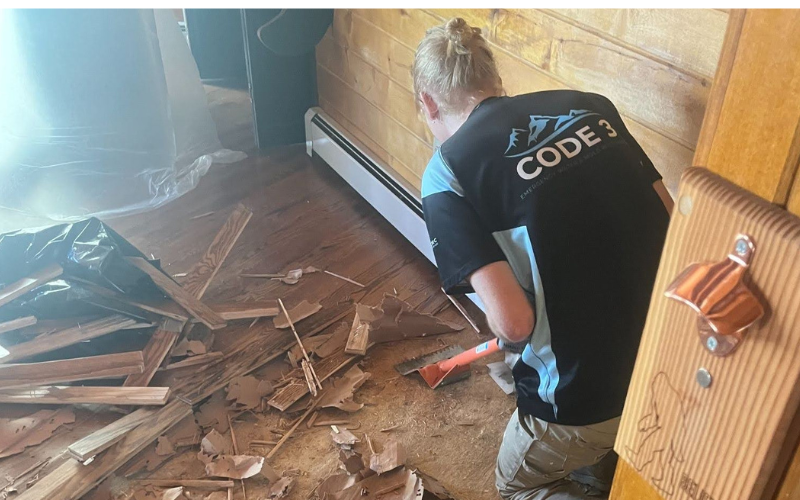
The original problem was a leak from a refrigerator water line. The homeowner cleaned up the water they could see, but moisture had traveled underneath the flooring. The issue was not fully investigated until approximately two to three months later.
When Code 3 inspected the home, moisture was still trapped beneath the floor. By that point, the project required replacement of the living room and kitchen flooring along with drywall repairs on the lower level of the home. The total work exceeded $10,000.
The important lesson is not that every refrigerator leak will become a $10,000 restoration job. It is that the size of the original puddle does not always tell you how far the water traveled.
What Should You Do Immediately After Water Damage?
If water enters your home, act based on the possibility that it traveled farther than you can see. First, stop the source of water if you can do so safely. Remove obvious standing water where appropriate, but do not assume that means the structure is dry.
Look for signs that water may have traveled into surrounding materials, including:
- wet or swollen baseboards
- soft drywall
- changes in flooring
- moisture beneath cabinets
- water staining on a lower level
- damp carpet or padding
- persistent humidity or odors
If a significant amount of water entered the home or you are unsure where it went, professional assessment can help determine the extent of the loss.
Can You Prevent Mold After Water Damage?
The most important step is getting affected materials dry. Cleaning or disinfecting a visible surface does not solve a moisture problem if water remains underneath or behind it.
Prompt extraction, adequate airflow, dehumidification, moisture monitoring, and removal of materials that cannot be restored can all form part of the process depending on the loss.
Frequently Asked Questions
How long does it take mold to grow after water damage?
Mold can begin developing quickly when building materials remain wet. Code 3 generally considers approximately 48 to 72 hours an important window in Colorado, although the timeline varies based on temperature, humidity, airflow, affected materials, and how quickly drying begins.
Can mold start growing within 24 hours?
Microbial activity can begin before visible mold appears. A homeowner should not wait for visible growth before addressing wet drywall, flooring, insulation, or other porous materials.
Does mold always grow after water damage?
No. Properly drying affected materials quickly can reduce the likelihood that a water loss develops into a mold problem. The outcome depends on how wet the materials became, how long they remained wet, and whether drying was effective.
Can mold grow under flooring?
Yes. Water can travel beneath finished flooring and become trapped against underlayment or subflooring. The finished surface may appear dry while moisture remains below it.
Can mold grow behind drywall after a leak?
Moisture can become trapped inside a wall cavity or within porous drywall. If the area remains damp, it can create conditions that support mold growth even before anything is visible from the room.
Does Colorado’s dry air prevent mold after a leak?
No. Low outdoor humidity does not guarantee that moisture trapped inside walls, flooring, insulation, or other materials will dry adequately. Colorado’s dry conditions may assist the drying process in some situations, but the affected materials still need to be monitored.
How long does professional water-damage drying take?
Code 3 says many typical water losses take about 3 to 5 days to dry. The actual timeline depends on the amount of water, affected materials, environmental conditions, and extent of the loss.
How do I know whether my wall or floor is actually dry?
Touch alone is not reliable. Professional restorers use moisture measurements and other assessment tools to monitor the materials throughout drying and determine when appropriate drying conditions have been reached.
Should I call for water restoration if I already cleaned up the puddle?
If water may have reached drywall, flooring, cabinets, insulation, or other concealed materials, it can be worth having the area checked. The visible puddle may represent only part of the water loss.
What happens if mold has already started growing?
The moisture source and affected materials still need to be addressed. Depending on what is found, the project may involve both water damage restoration and mold remediation.
Do Not Wait for Mold to Tell You the Water Is Still There
The first few days after a water loss matter because the damage is not limited to what you can see. A floor can feel dry while moisture remains underneath it. A wall can look normal while drywall, insulation, or framing is still wet.
If you have had a plumbing leak, appliance failure, basement water problem, or another water loss in Northern Colorado, Code 3 can inspect the affected area and determine how far the moisture has traveled.
Contact Code 3 Water Restoration & Mold Remediation for a water-damage inspection and a clear plan for drying and restoring your home.