

24/7 Water Damage Restoration in longmont, CO
Water coming up through the basement slab of a 1979 ranch off Hover can turn a finished lower level into a restoration project quickly. In Longmont, many water losses start with aging plumbing, water heaters, drain backups, or hidden moisture rather than creek flooding.
Code 3 provides 24/7 water damage restoration in Longmont for burst pipes, basement water, sewage backups, mold, and other property damage. We trace the source, determine how far the water traveled, dry affected materials, and handle reconstruction when the damaged space needs to be rebuilt.
Call for 24/7 emergency water damage restoration in Longmont.
24/7 Emergency Service | IICRC Certified | Licensed & Insured | Full-Service Rebuilds
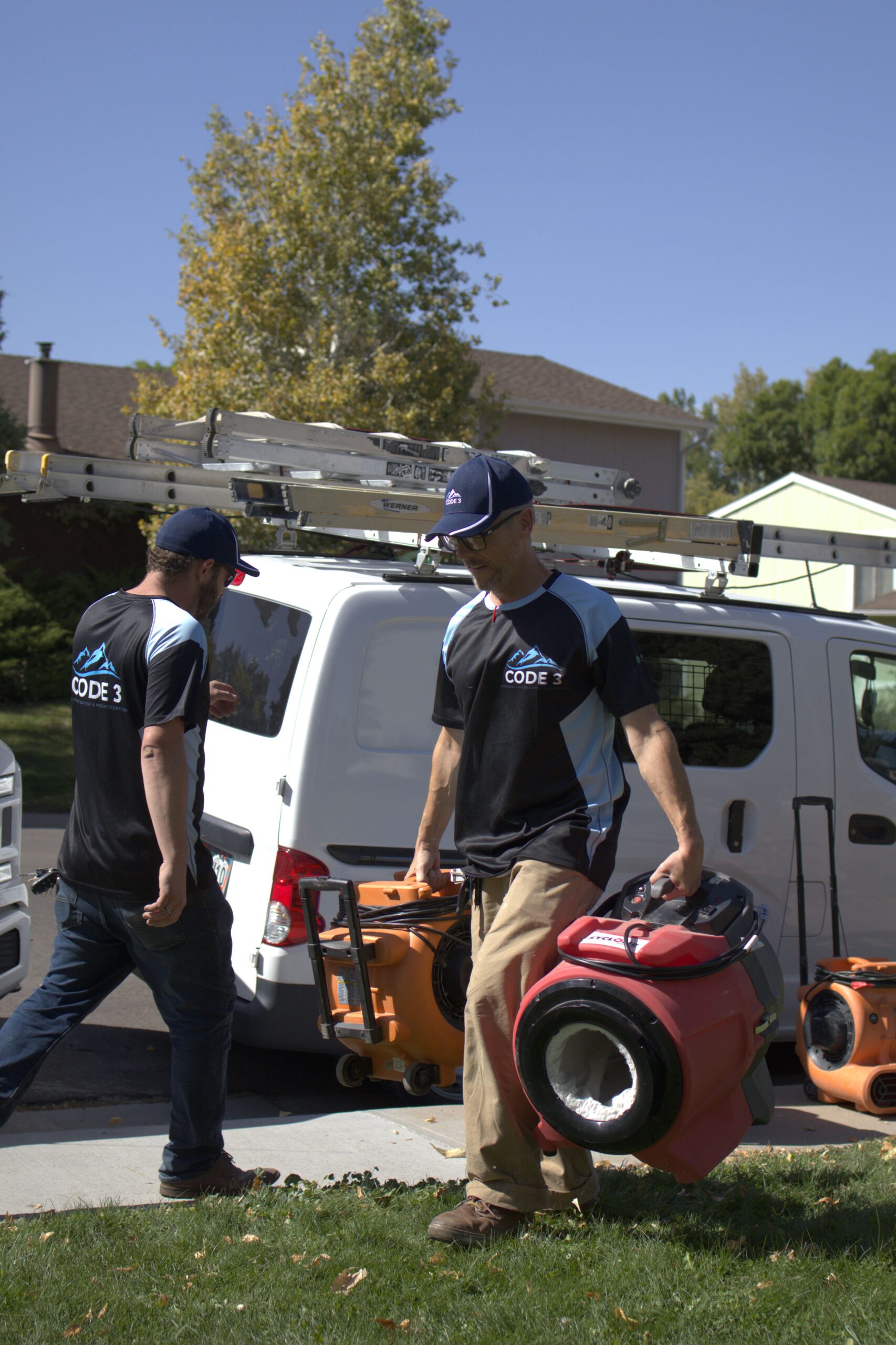
Water Damage and Mold Services in Longmont
The majority of Longmont housing was built in the 1970s and 1980s. That gives the city an unusually large group of homes reaching the same plumbing-age window at roughly the same time.
Code 3 provides emergency water damage restoration for supply-line failures, water heater ruptures, basement water removal, cast iron drain backups, sewage cleanup, and other indoor water losses. Finished basements are a major concern because water can reach areas behind finished walls before the full extent of the loss is clear.
In a house built in the late 1970s or 1980s, restoration may involve original galvanized or copper supply lines, cast iron drain stacks, or a second- or third-generation water heater. These are different conditions from those found in Longmont's newer housing.
Code 3 also addresses mold behind finished basement walls when moisture remains trapped. Learn more about our mold remediation process.
Old Town adds another type of property to the mix. Victorians, partial basements, original drain lines, and older plumbing systems can require a different approach from homes built later in the century.
When damaged materials need to be removed, Code 3 can continue from drying into structural repairs and rebuilding.
Our Longmont Water Damage Restoration Process
Longmont restoration starts with finding the source and determining what is actually wet.
Code 3 maps moisture throughout the affected area and removes standing water when extraction is needed. From there, the team determines which materials can be dried and which cannot be salvaged.
Drying equipment is placed based on the loss, and moisture levels are monitored as the structure dries. Materials that cannot remain are removed, and affected areas are cleaned and treated as needed.
The source is also traced so the restoration does not stop at the visible damage. Sewage backups and other Category 3 losses require a different handling approach, which is especially relevant in Longmont where older drain infrastructure can contribute to backup-related losses.
Once cleanup and drying are complete, Code 3 can move into reconstruction. That is particularly useful in finished basements where flooring, drywall, or other materials may need to be replaced after a significant loss.
If insurance is involved, Code 3 documents the source, affected areas, and restoration work before the adjuster arrives. Coverage is determined by the policy and insurance carrier.
Frequently Asked Questions About Water Damage Restoration in Longmont

Water Damage Restoration Throughout Longmont
Code 3 serves Old Town and Downtown, Prospect New Town, Somerset Meadows, Idaho Creek, Yeager Farm, The Valley, Chance Acres, Longmont Estates, Quail, Clark Centennial, West St. Vrain, Upper Clover Basin, and western neighborhoods along the St. Vrain.
Longmont sits mostly in Boulder County, with a portion in Weld County. Permitting and inspection here differ from Larimer County, so reconstruction requirements should be confirmed for the individual property.


Why Choose Code 3 in Longmont?
Code 3 is available 24/7 for Longmont water emergencies and can carry the project beyond drying into the rebuild.
That matters in a city with so many finished basements. A burst pipe, drain backup, or Category 3 loss may require drywall, flooring, or other finished materials to be removed before the structure can be properly restored. Code 3 can continue into those repairs rather than leaving the property owner to find another contractor once cleanup is complete.
Pat and Nate have owned and operated Code 3 for six years, backed by more than 12 years of trade experience. The company is IICRC certified for water restoration, licensed and insured.
From the initial assessment through reconstruction, Code 3 can keep the restoration process with one team.
A Recent Longmont Restoration
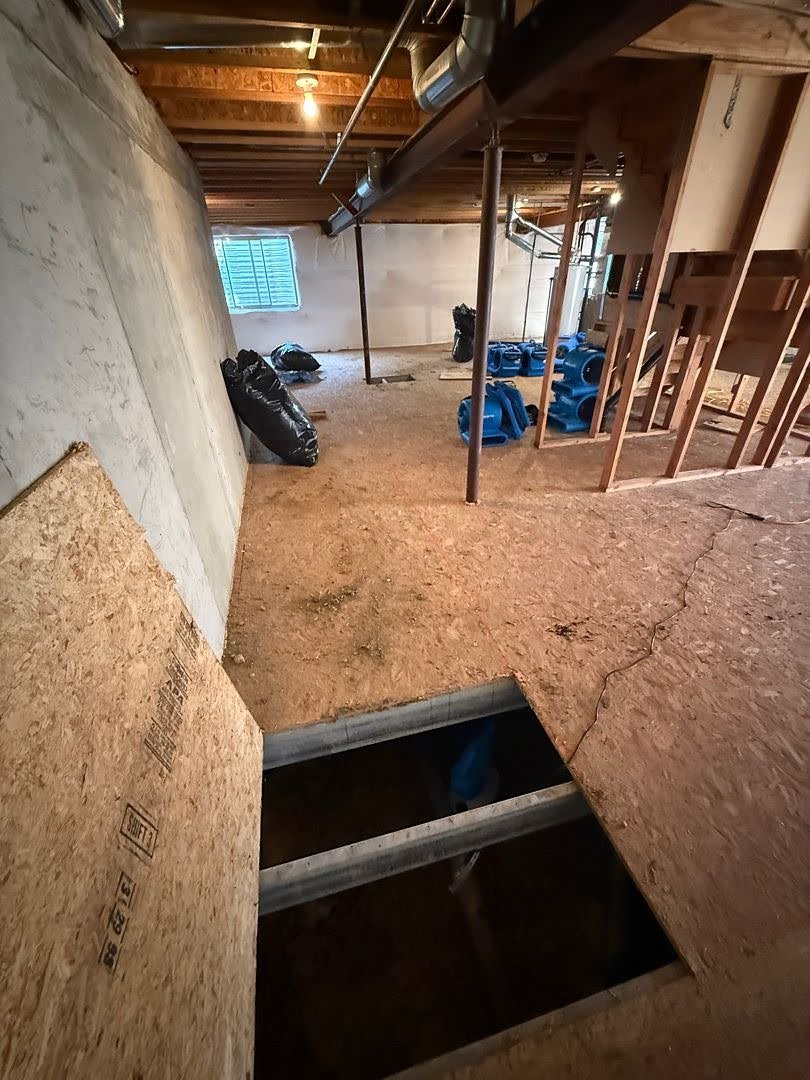
Code 3 recently completed a water restoration project at a Longmont home where significant moisture had affected the crawlspace and subfloor area.
The team removed sections of flooring to increase airflow and help moisture escape from beneath the structure. Air movers and an LGR dehumidifier were used throughout the drying process, with equipment repositioned as wetter areas were identified.
Moisture conditions were monitored closely as the job progressed. At one point, relative humidity inside measured 84%, compared with 33% outdoors. Code 3 adjusted the drying setup by using open-circuit drying and additional airflow. Within minutes, the indoor relative humidity dropped to 64%, and later readings reached 48% as the structure continued to dry.
Areas near the sump remained wetter than surrounding sections, so additional air movers were directed there. Once moisture conditions improved, the sump pump was installed and tested, and a vapor barrier was laid and sealed. One remaining damp section was intentionally left uncovered until it was dry enough to complete.
This project shows how water restoration can require more than simply removing standing water. Drying conditions have to be monitored throughout the job, and equipment, airflow, and access may need to be adjusted until the affected materials and spaces reach acceptable moisture levels.
What longmont Customers Say About Code 3


Why Longmont Properties See Water and Mold Issues
Longmont's Flood Risk Starts Upstream
One of the most important things to understand about Longmont flooding is that the worst water can come from rain that falls west of the city.
In September 2013, Longmont received around 6 inches of rain while the foothills just west of town received close to 17 inches over the first four days. City engineering has explained that the rainfall within Longmont would have caused nuisance and localized flooding, but the much heavier rainfall in the foothills moving downstream drove the destructive event.
St. Vrain Creek flows exceeded 37,000 cubic feet per second, compared with 10,000 cfs for a 100-year event. The river breached west of the city, and a series of mined gravel pit breaches eventually carried floodwater toward Heron Lake and into Longmont.
Six to eight feet of water reached some neighborhoods that were outside the mapped FEMA floodplain. More than 400 properties in The Greens, Champion Greens, Golden Ponds Estates, and the Valley subdivisions were affected.
That history is why being outside a mapped floodplain is not a guarantee against flooding.
Longmont Is Better Protected Than It Was in 2013
Longmont has spent years improving its flood protection.
Resilient St. Vrain has deepened and widened the channel. The Main Street and South Pratt Parkway bridges were replaced with longer, wider structures that convey up to 100-year flood levels. The Heron Lake Relief Channel was built to intercept floodwater and direct it back to the St. Vrain. The Left Hand Creek Flood Project removed 110 structures from the Special Flood Hazard Area.
Those improvements matter. Longmont is better protected than it was in 2013.
Most water damage in Longmont today has nothing to do with creek flooding. It comes from pipes, appliances, water heaters, sewer backups, and roofs.
Longmont's Housing Is Reaching the Same Age at Once
Longmont's large 1970s and 1980s housing cohort shapes many of the water losses Code 3 responds to. A house built in 1978 is now around 48 years old, putting original galvanized and copper supply lines, cast iron drain stacks, and second- or third-generation water heaters into a common failure window.
That means Longmont has a large group of homes reaching similar plumbing ages at the same time.
Knowing when supply lines reach end of life can be especially useful for homeowners in this part of the city's housing stock.
Old Town and the East Old Town area add older Victorians and bungalows, partial basements, and original drain lines.
Expansive clay and freeze-thaw cycles add another source of movement and moisture risk around Longmont foundations.
The dry climate can also make hidden moisture easy to underestimate in finished basements. A surface may appear dry while moisture remains behind finished walls, creating conditions where mold can develop.
Need Water Damage Restoration in longmont?
Code 3 is available 24/7 for water damage restoration, mold remediation, property damage recovery, and rebuilding in Longmont & the surrounding areas.