

Mold is not always growing somewhere obvious. A bathroom ceiling or dark patch around a window is easy to notice. Moisture behind drywall, beneath flooring, or inside a crawlspace can be much harder to find. Some of the most important signs of mold in a house have less to do with a visible patch and more to do with where water has been, how the home is built, and which areas stay damp.
When we inspect Fort Collins homes for mold and moisture, there are five areas we check particularly closely: crawlspaces, behind drywall, beneath flooring, attics, and basements.
Key Takeaways
- Mold often develops in places you cannot see during normal day-to-day use.
- Crawlspaces are one of the most common places we find hidden moisture and mold.
- Slow plumbing leaks can affect drywall and wall cavities long before visible damage appears.
- Water can remain underneath flooring after toilet leaks, shower leaks, appliance failures, or previous water damage.
- Roof leaks, condensation, poor ventilation, and bathroom exhaust can contribute to attic moisture.
- Basements can be affected by foundation water, groundwater, plumbing, sump areas, condensation, and exterior drainage.
- Older homes can have moisture issues related to aging plumbing, foundations, and previous renovations, but newer homes can develop hidden moisture problems too.
- If your first clue is an unexplained musty odor, our guide What Does Mold Smell Like? Signs of a Hidden Mold Problem goes deeper into that side of hidden mold.
1. Crawlspaces
Crawlspaces are at the top of our list when we are looking for hidden moisture and mold.
They are easy to forget because most homeowners rarely spend time underneath their homes. But crawlspaces may contain plumbing, wood framing, insulation, foundation materials, and exposed soil. Any of those areas can be affected by moisture.
Some of the common sources we look for include:
- ground moisture
- plumbing leaks
- foundation issues
- drainage problems
- condensation
We have seen crawlspaces with elevated moisture even when the living space above feels completely dry.
Signs to Look For
If your crawlspace is safely accessible, watch for:
- damp soil
- water staining
- standing water
- wet insulation
- discoloration on wood
- plumbing drips
- moisture around foundation walls
- recurring humidity problems
A crawlspace moisture issue does not automatically mean you need a major mold remediation project. But if the area keeps getting wet, it is worth finding out why before more materials are affected.
2. Behind Drywall
Some of the more surprising moisture problems we find are inside walls that look completely normal from the room. Slow plumbing leaks are a common cause, especially around bathrooms, showers, toilets, kitchens, and other walls that contain water lines.
Moisture behind drywall can also come from:
- roof leaks
- window leaks
- shower leaks
- toilet leaks
- plumbing failures
- previous water damage
The finished side of the drywall may look fine while moisture affects the back of the material, insulation, or framing inside the wall.
What Should You Watch For?
Look for changes such as:
- staining
- bubbling or peeling paint
- swollen baseboards
- soft drywall
- recurring discoloration
- previous leaks in the same area
- moisture around plumbing fixtures
We do not recommend opening walls just because you suspect hidden mold. There are safer ways to narrow down the source before removing building materials.
3. Under Flooring
Finished flooring can hide more water than many homeowners expect.
We commonly find moisture beneath flooring after leaks involving:
- toilets
- showers
- dishwashers
- refrigerators
- washing machines
- previous water losses
Water can move underneath flooring before there is an obvious problem on the surface. Depending on the type of flooring and the extent of the leak, moisture may also reach the underlayment or subfloor.
Signs There May Be Moisture Under the Floor
Watch for:
- lifting or buckling flooring
- warped boards
- soft areas
- discoloration
- loose flooring
- recurring moisture near an appliance or plumbing fixture
- flooring that changes after a previous leak
One of the biggest mistakes we see is assuming a floor is dry because the top feels dry. If water traveled underneath it, the materials below may still be holding moisture.
4. Attics
Attics have several potential moisture sources, and they are another area homeowners may go months without checking.
When we inspect an attic, we look for issues such as:
- roof leaks
- condensation
- ventilation problems
- bathroom exhaust venting into the attic
- insulation problems
Warm, moist air entering a colder attic can contribute to condensation. A roof leak can also wet insulation or framing before you see an obvious stain on the ceiling below.
What Can You Check?
From a safe, accessible location, look for:
- staining on framing
- wet or compressed insulation
- obvious roof leaks
- condensation
- discoloration
- bathroom exhaust ducts that do not appear to vent properly outside
Do not walk through unsafe attic areas or disturb questionable insulation or building materials.
5. Basements and Sump Areas
Basements are another common place where we investigate recurring moisture.
We look at several possible sources, including:
- foundation intrusion
- groundwater
- plumbing leaks
- condensation
- sump pits
- drainage around the exterior of the home
Foundation-related problems can be more involved because fixing the visible damage may only address part of the issue. If water continues entering the space, the moisture problem will continue too.
Pay attention to:
- moisture around foundation walls
- recurring damp areas
- water near the sump
- staining
- swollen baseboards
- flooring changes
- condensation
- previous basement water problems
If the same area keeps getting wet, it is worth addressing the source rather than repeatedly repairing the surface.
Are Hidden Mold Problems Different in Fort Collins Homes?
We tend to see more of a pattern based on the age of the house, foundation type, drainage, construction methods, and previous remodeling than on a specific Fort Collins neighborhood.
Older homes may have aging plumbing, older foundations, previous renovations, or older waterproofing systems that affect how moisture enters or moves through the structure.
But a newer house is not automatically a dry house. We also see moisture problems in newer construction. Plumbing defects, drainage problems, construction moisture, ventilation issues, and water trapped behind finished materials can happen in newer homes too.
Northern Colorado homes can also have crawlspaces, sump systems, radon systems, swamp coolers, and different foundation configurations. All of those features can influence how moisture moves through a property. The construction and water history of the home usually tell us more than the neighborhood name.
What Can You Check for Mold Yourself?
You do not need to start removing walls or flooring to do a useful first inspection.
Start with places where water is most likely to show up.
Check:
- beneath kitchen sinks
- beneath bathroom sinks
- around toilets
- around showers
- behind or beside appliances
- around windows and doors
- foundation areas
- mechanical rooms
- safely accessible crawlspaces
- baseboards
- flooring
Look for staining, recurring dampness, warped materials, leaks, or areas where a previous water problem keeps coming back.
If the main clue is an odor rather than visible moisture, read our guide What Does Mold Smell Like? Signs of a Hidden Mold Problem. That article explains what mold can smell like, where hidden growth may be located, and which other household problems can create similar odors.
What Should You Avoid Opening or Removing Yourself?
We do not recommend tearing into drywall, pulling up flooring, or removing suspected contaminated material just to see what is underneath.
Disturbing an affected area can spread dust and other contaminants into the surrounding space. Older building materials may also contain hazards such as lead or asbestos that have nothing to do with the mold itself. Opening the wrong area can also turn a contained problem into a much larger cleanup.
Start with the visible clues, the history of the property, and where moisture may have traveled. If something still does not add up, an inspection can help determine whether materials actually need to be opened.
How Do We Find Mold Behind Finished Surfaces?
Finding hidden mold is usually more about tracing moisture than randomly opening walls.
We start by talking with the homeowner about what they have noticed and whether the property has had previous leaks or water damage. From there, we use visual inspection, infrared scanning, and moisture meters to narrow down areas that may need further investigation.
Infrared equipment can help us identify temperature differences that deserve a closer look. It does not directly see mold. Moisture readings and inspection of the building help us determine whether water may be present behind or within materials.
A typical inspection takes about 15 to 30 minutes. Our free inspection includes a licensed water restoration technician who evaluates the problem and develops a plan for mitigation and restoration when work is needed. If mold is found, our Mold Remediation service page explains what the next steps can involve.
Mold Can Turn Up in Unexpected Places
Not every hidden mold problem is inside a wall or crawlspace. We have even encountered mold around coffee machines and front-loading washing machines. The common factor is moisture. Any area that repeatedly holds water, stays damp, or gets limited airflow can be worth checking.
Another mistake we see is cleaning visible growth and assuming the entire problem is solved. If the source of the moisture is still there, the conditions that allowed the mold to grow are still there too.
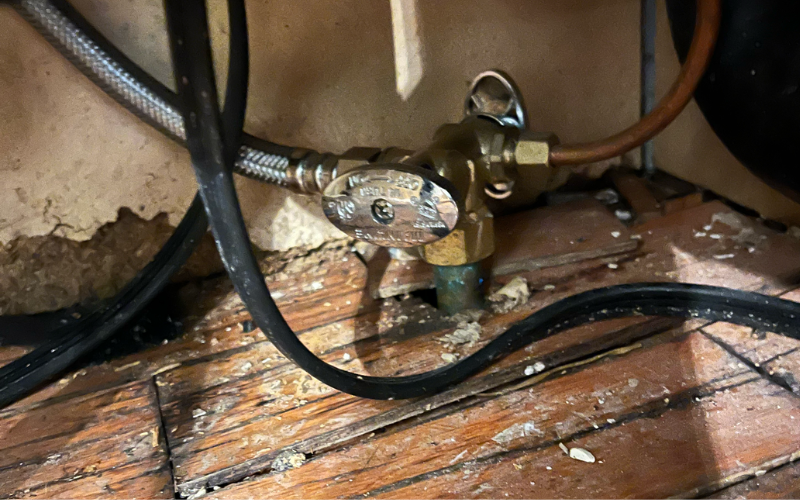
Suggested photo caption: Moisture and deterioration found around a concealed plumbing connection during one of our inspections.
When Should You Call for a Professional Mold Inspection?
You do not need to wait until mold covers an entire wall before asking someone to take a look.
An inspection can make sense when:
- moisture keeps returning
- visible growth comes back after cleaning
- a leak affected areas you cannot see
- flooring or drywall has changed after water damage
- the problem is inside a crawlspace or attic
- you cannot determine where the moisture is coming from
- you suspect growth behind finished materials
Scheduling an inspection does not automatically mean you need an expensive mold remediation project.
Sometimes we find a small, manageable problem. Sometimes we find that the issue is not mold at all. The goal is to understand what is happening, where the moisture is coming from, and what actually needs to be done.
Finding a problem early can also help limit how much of the structure becomes affected.
Frequently Asked Questions About Hidden Mold
What are common signs of mold in a house?
Visible growth is one sign, but hidden moisture may also show up as staining, peeling finishes, warped flooring, recurring dampness, or water damage that does not fully resolve.
If your main concern is an unexplained musty smell, see our guide What Does Mold Smell Like? Signs of a Hidden Mold Problem.
Where does mold hide most often?
Some of the most common places we find hidden mold and moisture are crawlspaces, behind drywall, beneath flooring, attics, and basements.
Can mold grow behind drywall without being visible?
Yes. Slow plumbing leaks, shower or toilet leaks, roof leaks, and window leaks can introduce moisture behind drywall before the finished side shows obvious damage.
Can mold grow underneath flooring?
Yes. Water from toilets, showers, dishwashers, refrigerators, washing machines, or previous water losses can travel underneath flooring and affect the materials below the finished surface.
How do I find hidden mold in my house?
Start by looking for moisture rather than tearing open materials. Check plumbing fixtures, appliances, baseboards, flooring, foundation areas, crawlspaces, attics, and places with a history of water damage.
If you still cannot identify the source, we can use moisture measurements, infrared scanning, and inspection of the building to narrow down the problem.
Can a brand-new house have hidden mold?
Yes. Newer homes can still have moisture problems.
We see issues related to plumbing defects, drainage, construction moisture, ventilation, and water trapped behind finished materials in newer homes as well as older ones.
Should I remove drywall to check for mold?
We do not recommend opening a wall simply to investigate.
Removing building materials can disturb contamination and may expose other hazards. A moisture assessment can help determine whether the wall actually needs to be opened and where further investigation should take place.
How long does a mold inspection take?
Our typical inspection takes about 15 to 30 minutes, although the exact time depends on the property and the concern.
A licensed water restoration technician will evaluate the area and develop a plan for mitigation and restoration if work is needed.
Does finding hidden mold always mean I need remediation?
No. The purpose of the inspection is to determine what is happening, how extensive the problem is, and where the moisture is coming from.
We would much rather inspect a home and find a small issue than have a homeowner wait until a minor moisture problem becomes a larger restoration project.
Think You Have Hidden Mold? Start With the Moisture
You do not need to dismantle your home to look for mold. Start with the places water is most likely to reach. Check around plumbing, appliances, flooring, foundation areas, crawlspaces, basements, and attics. Look for changes in materials and think about previous leaks or recurring moisture.
If something does not add up, we offer free inspections to help Fort Collins homeowners determine what is happening before deciding what work is actually needed.
Contact Code 3 Water Restoration & Mold Remediation to schedule a mold and moisture inspection in Fort Collins.