

24/7 Water Damage Restoration in Loveland, CO
A burst line in an Old Town bungalow can mean water in an older foundation or crawlspace. A soaked crawlspace off West 4th presents a different challenge than a ceiling stain in a newer Centerra home.
Code 3 provides 24/7 water damage restoration in Loveland for homes and businesses dealing with burst pipes, appliance and supply-line failures, basement or crawlspace water, mold, sewage backups, and other property damage. We assess the source, map moisture, remove water, dry the structure, clean affected areas, and can handle reconstruction when repairs are needed.
Call for 24/7 emergency water damage restoration in Loveland.
IICRC Certified | Licensed & Insured | Locally Owned | 12+ Years of Trade Experience
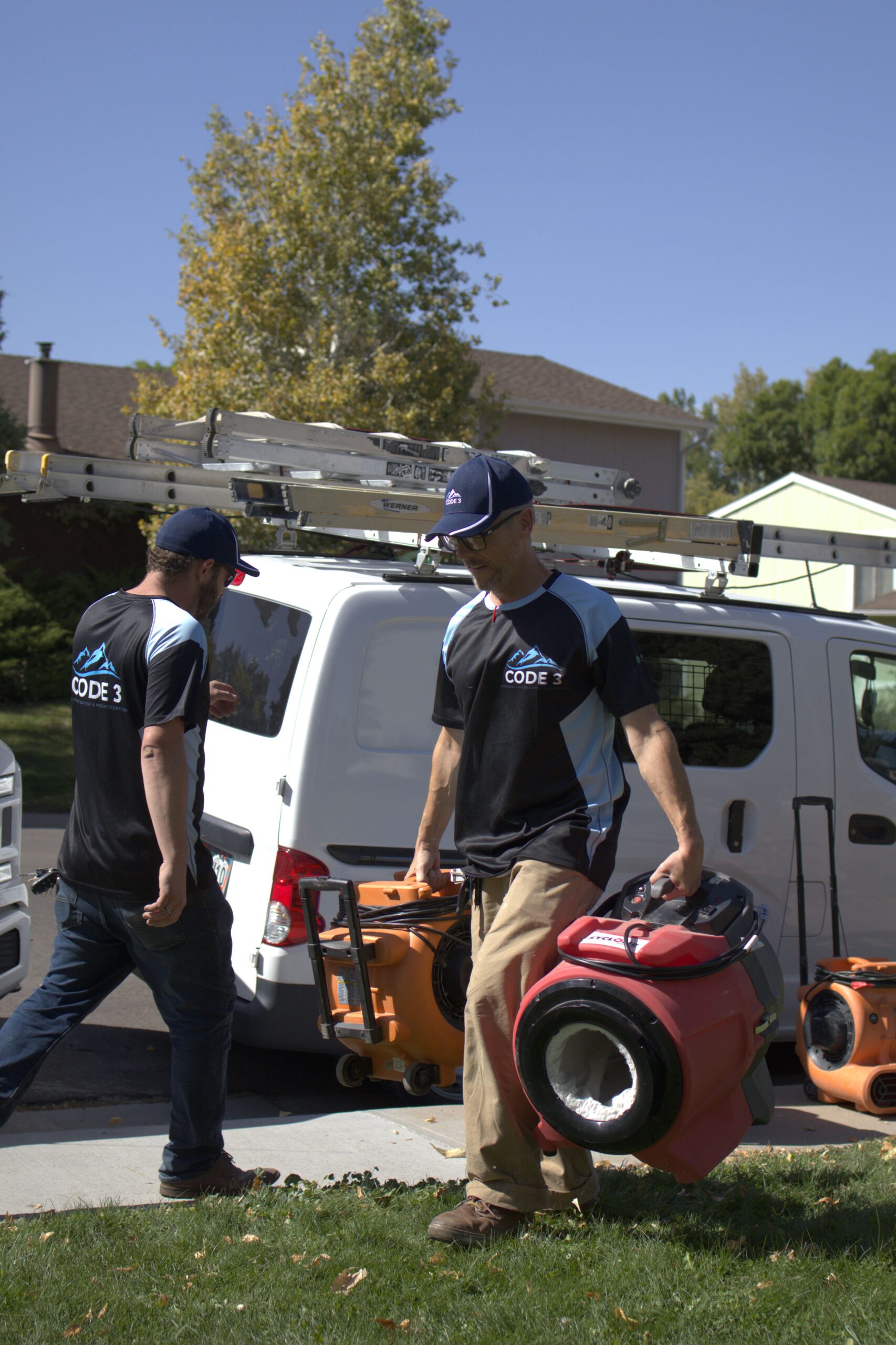
Water Damage and Mold Services in Loveland
Loveland's housing ranges from late-1800s and early-1900s homes in and around Old Town to newer development in Centerra, The Lakes at Centerra, Kinston, Thompson River Ranch, and Van de Water. Those properties do not always experience or dry from water damage in the same way.
Code 3 provides water damage restoration including extraction, moisture mapping, structural drying with monitoring, removal of unsalvageable material, cleaning, antimicrobial treatment, source tracing, and rebuild work.
For older Loveland properties, the work may involve stone or brick foundations, dirt or partial crawlspaces, and original supply lines. Newer east-side homes are more likely to see appliance or supply-line failures in finished space.
Code 3 also provides mold inspection and removal, fire and property damage recovery, full structural rebuilds, and preventative work such as moisture monitoring, exterior and window sealing, basement protection, insulation, and freeze protection.
Post-fire debris and mud intrusion cleanup is another important service in Loveland. When runoff carries sediment into a property, the restoration approach depends on what entered the building and which materials were affected.
Our Loveland Water Damage Restoration Process
The restoration plan starts with identifying what entered the property and how far it travelled.
- Assessment and moisture mapping: We inspect the affected areas, trace the source, and map moisture beyond the visible damage.
- Water extraction: Standing water is removed when needed.
- Containment: Containment is used when the type of loss or affected materials call for it.
- Structural drying and monitoring: Drying equipment is placed, and moisture levels are monitored during the process.
- Material removal: Materials that cannot be salvaged are removed.
- Cleaning and treatment: Affected areas are cleaned and treated as needed.
- Source tracing: We identify the source so the restoration does not stop at the visible damage.
- Rebuild: Code 3 can complete repairs and reconstruction after drying.
Loveland losses can vary widely. Clean water from a burst line, groundwater, and sediment-laden post-fire runoff can require different containment and disposal approaches.
If insurance may be involved, Code 3 documents the loss thoroughly and can assess affected areas before the adjuster arrives. We do not promise claim approval. Coverage decisions are made by your insurer under your policy.
Frequently Asked Questions About Water Damage Restoration in Loveland

Serving Loveland From Downtown to the Foothills
Code 3 serves Loveland neighborhoods including Old Town and the Downtown Historic District, west Loveland along the Big Thompson River, Mariana Butte, Centerra, The Lakes at Centerra, Kinston, Thompson River Ranch, and Van de Water.
Typical Loveland response time: Code 3 answers calls right away. For active water emergencies, the team typically responds as soon as possible, with arrival usually within 1–2 hours. Mold-related appointments are generally scheduled within 1–2 days, depending on crew availability.
Code 3 also serves Big Thompson Canyon and foothills properties west of Loveland. Response times and access can vary based on property location, weather, and road conditions.
Code 3 also has dedicated water damage restoration information for nearby Greeley and Longmont.

Why Choose Code 3 for Water Damage Restoration in Loveland?
Water restoration in Loveland can look very different along the Big Thompson corridor, in an Old Town crawlspace, in newer east-side development, or farther west toward the foothills and canyon.
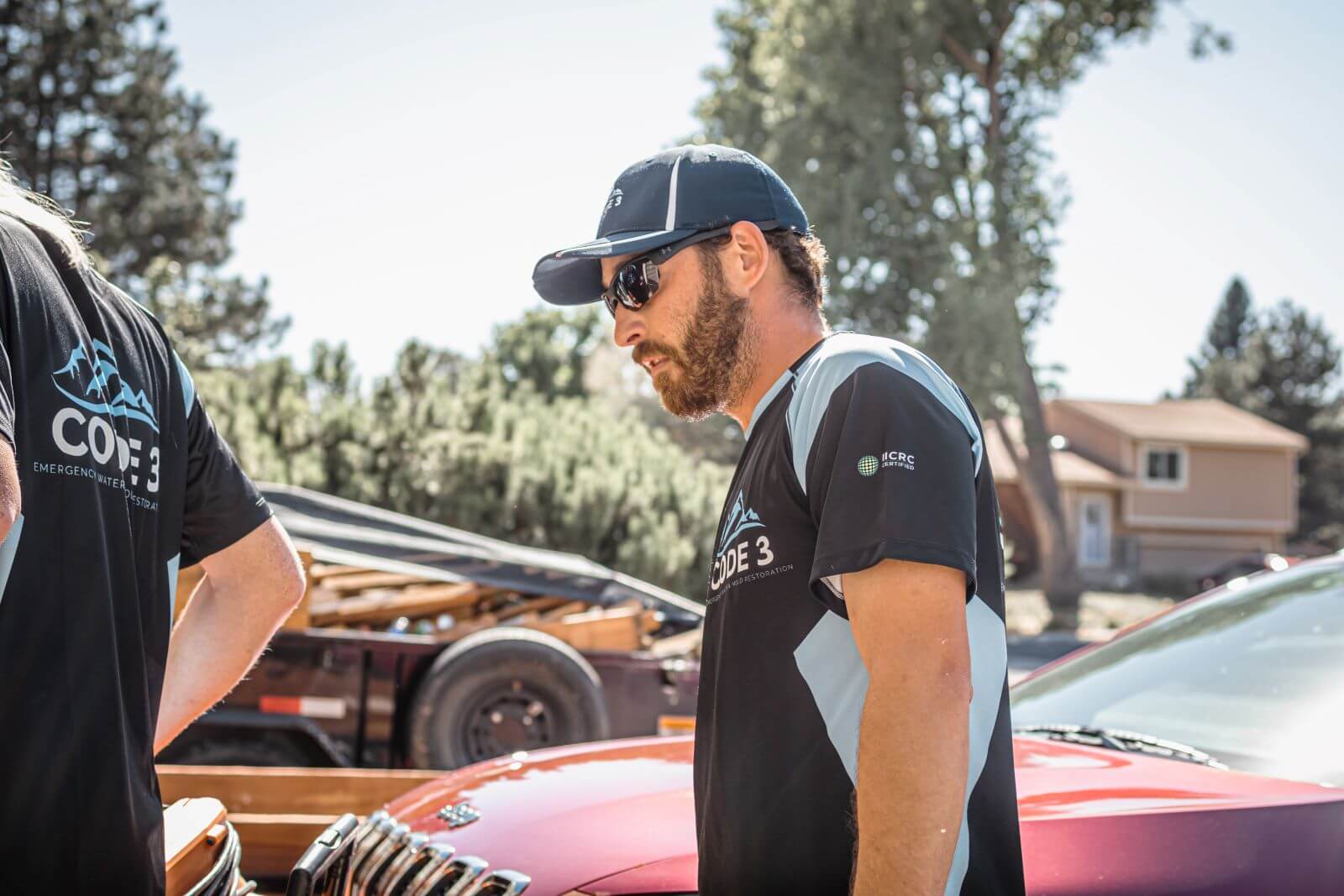
Code 3 is locally owned by Pat and Nate, who have six years of owning and operating the company and more than 12 years of trade experience behind it. Code 3 is IICRC certified for water restoration, state licensed and insured, and available 24/7.
The company also handles rebuild work in-house. When drying requires removal of damaged materials, Code 3 can continue through reconstruction instead of handing that portion of the project off, to restore the property to its original condition or better.
What Loveland Customers Say About Code 3


Why Loveland Properties See Water and Mold Issues
The Big Thompson and Upstream Water Shape Loveland's Flood Risk
The Big Thompson River runs west to east through Loveland. In September 2013, after a week of steady rain, water levels rose to 500 times seasonal flow. More than three square miles of Loveland were inundated, every bridge over the river closed, 66 buildings in the city were impacted, and emergency responders made 80 rescues in less than 24 hours.
Upstream conditions mattered too. Lake Estes filled to the point that water had to be released from Olympus Dam to prevent a dam failure. National Weather Service thresholds show how serious conditions can become. At 11 feet, numerous streets and bridges crossing the Big Thompson flood. At 11.5 feet, widespread major flooding affects roads, homes, and businesses. That level has a 2% chance of being reached in any given year.
Burn Scars Add Flash-Flood and Debris-Flow Risk
The Alexander Mountain Fire began July 29, 2024, north of Highway 34 and west of Loveland. It burned 9,668 acres, destroyed or damaged 51 structures, including around 30 homes, and forced more than 5,000 people to evacuate. Larimer County emergency services identified a drainage inside the burn area that flows into the Big Thompson River as a specific flood concern. Flash flood warnings were issued for the scar as recently as summer 2025.
Post-fire flood risk can remain elevated for years. The Cameron Peak burn scar, which burned 208,913 acres in 2020, borders the north edge of the Alexander Mountain scar and remains on the National Weather Service Colorado burn scar flood matrix.
For restoration, that distinction matters because sediment-laden post-fire runoff is handled differently from a clean internal water release.
Old Town and East Loveland Have Different Failure Patterns
Homes in and around Old Town date from the late 1800s through the early 1900s. They may have stone or brick foundations, dirt or partial crawlspaces, and original supply lines that dry differently and more slowly than a modern basement. In newer east-side areas such as Centerra, Kinston, Thompson River Ranch, and Van de Water, the more likely failure mode is an appliance or supply-line problem inside finished space.
For owners dealing with older foundations or crawlspaces, understanding crawlspace moisture problems can help explain why these spaces need a different drying approach.
Properties west of town can add seasonal occupancy, well and septic systems, longer travel distances, and freeze damage that may not be discovered right away. Freeze-thaw cycles and expansive clay are also part of the local risk picture. Soil movement and cracking can create paths for seepage.
Need Water Damage Restoration in Loveland?
Code 3 is available 24/7 for water damage restoration, mold remediation, property damage recovery, and rebuilding in Loveland.